

Long before safety codes and uniforms, craftsmen handmade aprons usage and care proof of their skill, a piece that aged with every hour of work. Times have changed, tools have evolved, yet the idea stays the same: people still need protection and something that feels personal. Today, we see new materials and modern gear, but when you think of honest, lasting workwear, the apron still comes first. Furthermore, for those who value authenticity and things that grow better with use, nothing compares to leather. We find these aprons in countless fabrics and textures, but they share a common character… “they do not last.” While having an apron made from luxury leather softens with every use, it carries a story in every mark and never loses its strength. That is why they remain a part of this enduring heritage, trusted for generations by chefs and craftsmen who believe in skill, patience, and quality that stand the test of time.
Table of Contents
We have gathered this guide for you to explore how the leather apron evolved through history, what makes them so enduring, and how to choose one that actually reflects your profession and style.
1. History
If you care about things made to last, leather has always had a place in your world. Its story stretches back centuries to a time when every tool and garment had a purpose, not a label. Craftsmen working with fire and steel relied on aprons cut from thick hides to keep them safe. Blacksmiths, farriers, and cobblers all wore them as a second skin, marked by heat, soot, and years of work.
However, those early aprons weren’t fashionable; rather, they were a survival. Leather was chosen because it could take the heat, blunt a spark, and mend when torn. Every crease told the story of a trade passed from one pair of hands to another.
When factories and machines arrived during the Industrial Revolution, the apron followed. Builders, machinists, and carpenters wore it for the same reasons strength, comfort, and trust. Even as work changed, the idea stayed the same: a good apron doesn’t need replacing. It simply learns your rhythm and lasts with you.
2. Uses of Handmade Aprons
Aprons made from leather have never belonged to one kind of work. They show up wherever hands stay busy and things get messy.
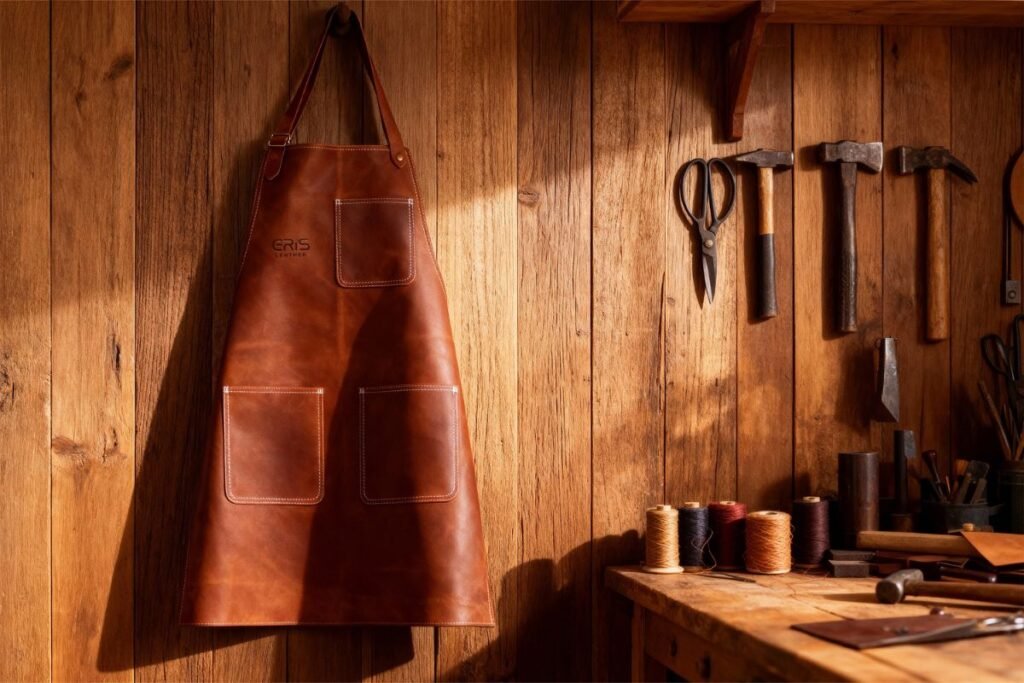
Welding and Metalwork
In the heat of a shop, sparks fly close. A luxury apron takes the hit so you can focus on the weld.
Carpentry and Woodwork
Wood chips, blades, and dust leather handles them all. The pockets keep what you need close, and it softens as the hours pass.
Culinary Work
In the kitchen, it earns its place quietly ever since. It shields from heat and splatter and still looks right when service starts.
Blacksmithing and Old Trades
Some things never change. Fire, hammer, leather they still work together as they always have.
Hospitality and Service
Behind a counter or bar, these aprons set a professional look with clean lines, a steady fit, and something that lasts.
3. Simple Care and Maintenance
Along with durability, one more feature of a professionally built apron is that you can wear it for decades with only a little care. After use, just wipe it with a damp cloth to remove dust and residue. However, avoid soaking it in water or using harsh detergents. Because they are built from natural material, due to weather conditions, it sometimes feels dry when you feel so use a small amount of mild leather cleaner and a soft cloth.
4. Personalization and Design Options
For leather items there are two levels of personalizations. First one is no two pieces of real leather are ever the same. Each one carries its own tone, grain, and small variations that make it unique. Moreover, adding a personal touch even enhances that character, turning a tool into something that feels like it belongs to you.
There are a few ways to do this.
Embossing: This procedure uses heat and pressure to create raised lettering or a logo, clean, classic, and full of presence.
Debossing: While in debossing design is pressed gently into the surface, giving a quieter, more refined look.
Engraving: It is a modern way to add fine details to metal fittings such as buckles or tags, a small modern accent that completes the piece.